From Vine to Winery: Optimizing Grape Transport
The journey of a grape, from vine to winery, is a fascinating thing. Optimizing grape transport is an important way to get the most bang for your buck. Safe, efficient and cost-effective crop transport can reduce logistical worries, helping you get premium wine to the lips of thirsty customers. The right grape processing equipment helps to preserve fruit integrity and maintain quality standards. It keeps your operation moving without costly downtime.
How can you use strategic transport to ensure your harvest travels safely from the block to the crush pad, arriving at its destination exactly as intended? Learn all you need to know here.
The Financial Impact of Inefficient Grape Transport
When your harvester sits there waiting for empty bins or has a full load languishing in the field, you're letting money slip through your fingers. Think of it like a crushed grape leaking juice, except that in this case, your grape is a massive piece of agricultural machinery that's wasting potential income.
Is the analogy ridiculous? Yes. Is it as ridiculous as ignoring the amount of potential income at stake? No. It's crucial to protect your investment from the moment grapes leave the vine until they reach processing. Safely transporting grapes from the vineyard to the winery is where many operations hit a bottleneck.
Research confirms that mechanical damage during transport is a primary cause of post-harvest loss, leading to considerable economic repercussions. When transporting grapes results in bruising or premature fermentation, the consequences can affect your entire operation through:
- Lower yields: Damaged fruit means less usable product will reach the crush pad.
- Reduced quality ratings: Compromised grapes produce inferior wine that commands lower prices.
- Reputational damage: Consistent quality issues erode buyer confidence and can impact long-term contracts.
- Lost revenue: Every bruised cluster represents money left on the table, which can quickly add up across several journeys.
Poor transport practices don't just mean losing a few grapes. They devalue your entire batch and undermine the premium pricing your vineyard worked all season to earn.
The Art of Capacity Matching For Transporting Grapes
Capacity matching aligns your transport equipment with your harvester's output. Get this right, and your operation flows seamlessly. The goal here is straightforward but effective. Your harvester never waits for an empty grape harvest bin, and any full bins are immediately transported to the winery.
This approach means no downtime, no bottlenecks and no wasted fruit sitting in the baking sun. Sizing your gondolas or grape harvest bins to match your harvester's output in tons per hour means you're prioritizing quality and efficiency.
When your grape harvest bin capacity aligns with your picking rate, you create a continuous workflow.
Preserving Grape Quality in Transport
The transport container directly affects fruit integrity. The wrong materials introduce contamination risks that no amount of careful handling can overcome. Choosing the right kind of food-grade, nonreactive materials protects your harvest in four key ways:
- Corrosion resistance: It prevents issues like rust and material degradation that can contaminate your fruit in transit.
- Hygienic properties: It provides a smooth surface that resists bacterial growth and cleans easily between loads.
- No flavor transfer: Food-grade materials don't transfer any metallic tastes or off-flavors that impact your grapes.
- Durability: Nonreactive quality materials can withstand years of exposure to acids, moisture and daily use.
AISI 304L stainless steel is the preferred material for food and beverage handling. This preference is due to its exceptional resistance to corrosion and ability to meet stringent hygienic standards. It's considered the industry standard for preventing contamination and preserving grapes in their natural state.
Importance of Temperature Control
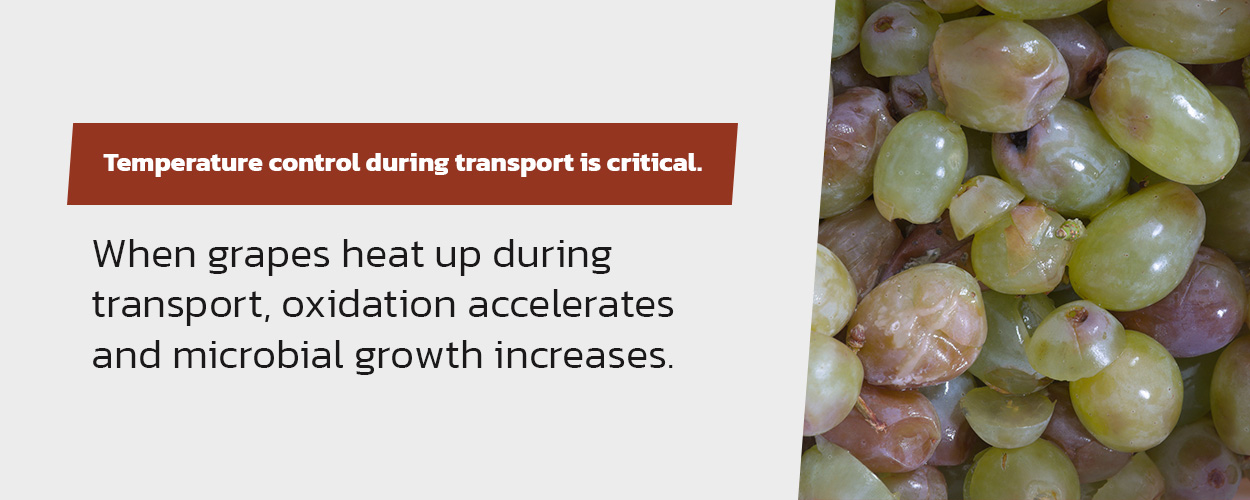
Temperature control during transport is critical. When grapes heat up during transport, oxidation accelerates and microbial growth increases. Both compromise the quality of your final product. Transporting grapes at cooler temperatures preserves their integrity and extends their life.
Grapes are easily susceptible to browning, leading to significant economic losses in the food industry. Keeping fruit cool during the haul from the vineyard to the winery is an essential quality-control measure that protects your investment.
Transporting With Grape Gondolas vs. Truck Bins
Choosing the right grape processing equipment will depend on your operation's specific needs. The decision between gondolas and truck bins is a personal one. It should consider your harvest volume, transport distances, existing infrastructure and workflow priorities.
Learn when to use each Pequea solution, so you can make an informed decision on how grapes are transported.
When to Choose a Pequea Grape Gondola
Gondolas excel in operations that already have tractor infrastructure. They're effective for shorter transport distances and work well with small to medium harvest volumes. They're the workhorse solution for vineyards that value maneuverability and a lower up-front investment.
Ideal users for grape gondolas include:
- Commercial vineyards and wineries: Primary users during harvest season who need an efficient movement process from vines to crush pads.
- Vineyard contracting companies: Firms that are managing harvesting services for multiple vineyard owners who need tractor-compatible equipment.
- Wine cooperatives: Centralized processing facilities that receive fruit from several different growers and need standardized capacity options.
- Vineyard management firms: Entities handling agricultural operations across multiple properties that require equipment versatility.
- Agricultural logistics companies: Businesses specializing in transporting harvested crops need reliable, easy-to-deploy solutions.
Pequea gondolas come in three and four-ton capacities to accommodate different needs. They offer lower initial costs and exceptional maneuverability in tight spaces. You need a tractor to pull them, and they're slower for long-haul transport compared to truck-mounted options.
Our grape gondola solutions are engineered to create a seamless flow, with capacities designed to match real-world vineyard operations.
When to Choose a Pequea GTB16 Truck Bin
Truck-mounted bins are built for high-volume operations. They're best suited for operations that need to move large quantities of grapes over longer distances between vineyard and winery. When maximum capacity and fewer trips matter more than tight-space maneuverability, this is your solution.
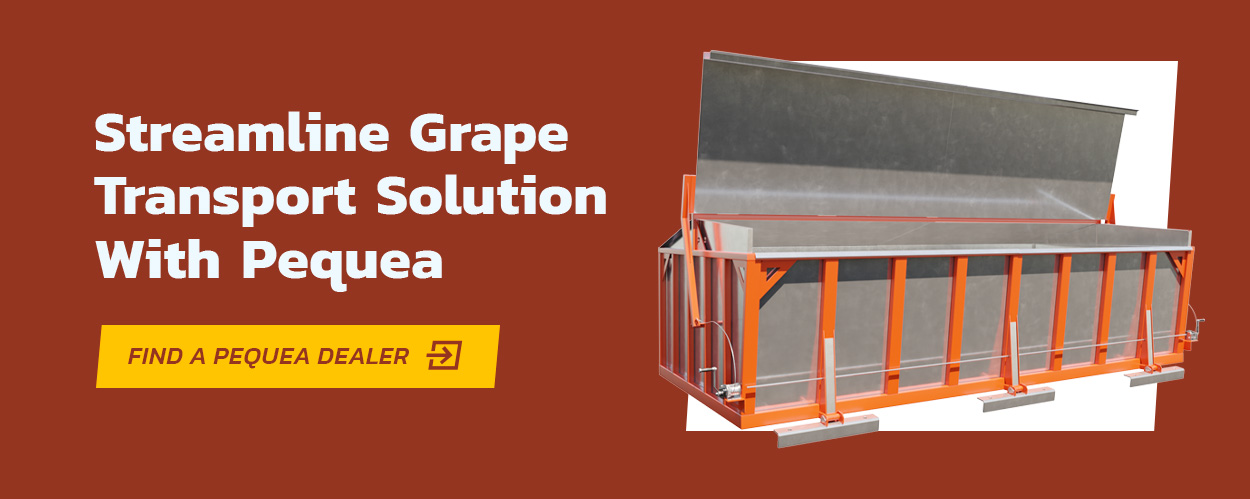
The Pequea GTB16 delivers 16 tons per load. That means fewer trips over long distances, reduced fuel costs and faster turnaround times during peak harvest. The higher initial investment pays off through operational efficiency. It's one of the main reasons why organizations choose it for moving serious volumes of grape harvest bins.
While it offers less maneuverability than tractor-pulled gondolas, it's well-suited for operations with good road access between blocks and processing facilities.
Streamline Grape Transport Solution With Pequea
The journey of your stock is like the journey of any business venture. It requires care, planning and attention to detail to reach its destination. Pequea builds transport solutions that preserve grape quality and keep your vineyard operation running efficiently. Our food-grade equipment is built to last, using our decades of experience supporting farmers and other organizations across North America.
We design and manufacture solutions that are American-made, delivering innovative equipment, parts and services to farms and agricultural organizations of all sizes. Whether you need a maneuverable gondola for shorter hauls or a high-capacity truck bin for long-distance transport, we've engineered solutions that stand up to demanding harvest conditions.
Your harvest deserves equipment built to protect it. Are you ready to find the perfect fit for your vineyard? Connect with a Pequea dealer to discuss your specific operational needs.